Where NYC Apartment Residents Can Safely Charge an E-Bike
The Direct Answer
For an e-bike rider in a New York City apartment building, the first place to look for safe charging is an area the building has designated for it. The Fire Department’s 2026-2027 Fire and Emergency Preparedness Annual Bulletin For New York City Apartment Buildings, published in The City Record on 23 November 2026, recommends using such a space if possible. Riders should ask which room or equipment is meant for charging before bringing a battery into a common area. A place to lock a bike and a place to charge one are different things.
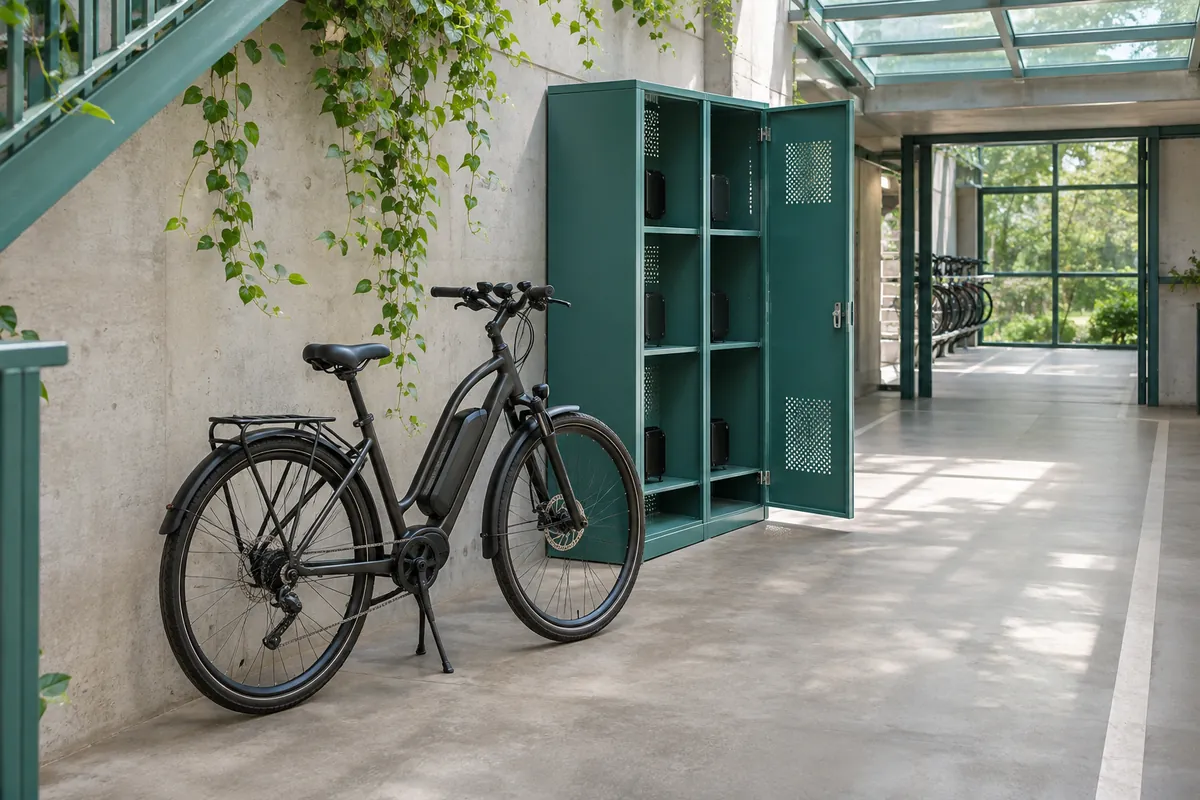
What should a rider ask before using a common area?
A rider can ask management whether the building has a designated charging area and what it can be used for. A building may have a room for storing bicycles without offering a charging service there. The fact that a socket is within reach does not establish that management has set the room up for charging batteries. The bulletin points residents towards a safe area provided for the purpose. The relevant answer is where that area is and what the building allows there, rather than whether an outlet happens to be free.
There are practical questions even when the answer is yes. A rider can ask whether the arrangement takes a whole e-bike or a removable battery, whether the space can also be used for storage, and how residents are expected to use the equipment. Those are questions to put to management rather than universal operating rules. Getting an answer before bringing the bike downstairs also avoids putting other residents in the position of having to decide whether an unfamiliar setup belongs in their shared space.
For anyone proposing a cabinet, the Fire Department publishes separate resources on equipment and installation approval, including a guide for a pre-installation site survey. These are resources for an installation decision. They are not instructions for a resident to set up charging beside a communal rack. A resident can ask whether a facility exists or whether management would consider one; the choice of equipment and location belongs with the people responsible for the building and the installation.
- Ask management to identify the designated charging location, if any.
- Confirm whether the location is for charging, storage or both.
- Check whether the arrangement is for a whole bike or a removable battery.
- Ask for the building’s instructions before using the equipment.
What if the building has no designated charging area?
The bulletin suggests asking the building or an employer whether a safe charging and storage facility can be provided. If that option is unavailable, the bulletin advises charging and storing outside if possible. For residents considering outdoor charging, that advice should be read alongside the Fire Department’s safety guidance to follow the manufacturer’s charging and storage instructions, keep the device and battery at room temperature and avoid charging in direct sunlight. An outdoor location also has to be somewhere the rider is allowed to use. The bulletin does not give permission to run a lead into a shared courtyard or use a neighbour’s outdoor socket.
The bulletin acknowledges that some riders may have to charge in their apartments. Its restrictions make the choice of place and time inseparable. The department warns against charging or storing an e-bike, e-scooter or its battery next to an apartment door or window, where a fire could block escape. It also advises against charging on or near a bed or sofa, close to curtains or papers, or using a power strip or extension lead. FDNY Smart adds that the charger goes directly into a wall outlet and that riders should use the manufacturer’s cord and adaptor made for the device.
Timing matters because the bulletin says not to charge unattended or overnight. For a resident who comes home late, that may mean the convenient charging slot is the wrong one. Moving the battery near the door so it can be picked up quickly in the morning would conflict with the instruction to keep it clear of escape points. If the only way to charge is an extension lead across the room or leaving the battery plugged in while everyone sleeps, the practical next step is to find a different arrangement rather than treating the apartment fallback as a blanket endorsement.
| Option | What to establish first |
|---|---|
| Building-designated space | Management confirms the location, what it accepts and how residents may use it. |
| Workplace facility | The employer confirms a safe charging and storage arrangement is available. |
| Outdoor location | The spot is permitted and the conditions are consistent with manufacturer instructions and FDNY advice. |
| Apartment fallback | Charging can be attended, away from escape points and materials that burn easily, directly at a wall outlet with the correct charger. |
What should riders check about the battery and charger?
The bulletin recommends buying from trusted sources and looking for certification. It lists UL 2849 and UL 2272 for devices, and UL 2271 for batteries. Those identifiers refer to different products. It is useful to establish first whether a seller is describing the whole bike or a replacement battery, rather than assuming that a label on one item says something about every component. The bulletin also advises against uncertified, illegal or aftermarket lithium-ion batteries.
FDNY Smart says a replacement should be the manufacturer’s battery that is compatible with the device. Its charging advice likewise calls for the cord and power adaptor made for that device. For someone buying a used bike, the corresponding questions are whether the battery is the right one for the bike and whether the charger supplied with it is the correct one. A familiar plug or the ability to connect it is not a substitute for checking the manufacturer’s instructions. That check can be made before seeking a charging spot or taking the bike into a shared room.
It helps to keep the equipment decision separate from the location decision. Management can say whether a charging facility is available and what it accepts; that is different from a manufacturer’s advice about which components go together. A rider who already has the correct equipment still needs somewhere suitable to use it. Conversely, the existence of a designated area does not make a damaged battery fit to charge. Asking about the facility and checking the equipment are both steps a rider can take before an ordinary charging session.
Is the bulletin a new rule requiring landlords to install chargers?
The notice and the safety advice do two different things. The notice says apartment building owners must distribute the bulletin to residents and building staff under Fire Department Rule 3 RCNY §401-06(d)(3). Because the bulletin was posted late, it gives an extended distribution deadline of 22 January 2027. The advice inside the bulletin recommends a safe building-designated charging area if possible. The distribution duty in the notice is not a requirement to install a charging facility.
For a resident, the distinction changes the request. Someone who has not received the bulletin can ask the owner about getting the required copy. Someone who needs a charging location can ask what facilities or rules the building already has, and whether a designated option is under consideration. A reply about distribution will not establish that a locker or room is available. Likewise, the absence of a charging room is not evidence that the owner has failed to distribute the bulletin.
What changes when the battery is damaged or at the end of its life?
A battery that develops an unusual smell, leaks, no longer charges or is visibly damaged is no longer a question of where to plug in. The bulletin says to dispose of such batteries properly and promptly, and not to attempt a repair. FDNY Smart advises stopping use immediately if there are signs such as a change in shape or colour, leaking, an odour or an odd noise; it advises calling 911 for those warning conditions. A shared charging room is not a drop-off point for a failing battery.
The Department of Sanitation says it is illegal and dangerous to put rechargeable batteries in ordinary rubbish or recycling. Its battery page explains disposal routes, including Special Waste Drop-Off sites and SAFE Disposal events. A resident dealing with a damaged pack should check the applicable instructions before transporting it or assuming a given destination will accept it. The building can clarify how its shared areas may be used, but its everyday rubbish or recycling bins are not an alternative disposal route.
The Fire Department also has a route for non-emergency concerns about improper charging, storage or disposal: its battery safety page directs reports to 311. That is a different situation from a battery showing signs of immediate trouble. Keeping the distinction clear matters in a shared building, where a neighbour may notice an improvised setup before knowing who owns the bike.
An enquiry to the building can focus on the place and the activity observed: whether batteries are being stored or charged there, and whether that use is authorised. It does not require a neighbour to identify the model or handle another person’s equipment. If the same room is used by residents who are simply collecting bicycles, a clear answer from management can also tell them where charging is supposed to happen and where to raise a concern if the arrangement is not being followed.
- Stop using a battery that shows warning signs; do not try to repair it.
- Follow FDNY emergency advice for signs such as leaking, unusual odour or odd noises.
- Use Department of Sanitation instructions for disposal, rather than ordinary rubbish or recycling.
- For non-emergency improper charging, storage or disposal, FDNY directs reports to 311.
Frequently Asked Questions
Is a socket in a bicycle room an invitation to charge?
An outlet does not establish that the room is designated for battery charging. Residents can ask management directly whether charging is permitted there and what equipment or instructions apply.
Can a rider leave a battery charging while out of the flat?
The Fire Department bulletin advises against unattended and overnight charging. A suitable place still needs to be available at a time the rider can monitor the charge.
Can a power strip make an awkward apartment layout workable?
The bulletin advises against power strips and extension leads for lithium-ion battery charging. FDNY Smart’s advice is to use the manufacturer’s cord and adaptor for the device and plug the charger directly into a wall outlet.
Does the November notice require every apartment building to provide a charger?
The duty stated in the notice is to distribute the annual bulletin to residents and staff. The suggestion to use a designated charging area is conditional on one being available.
Can an old e-bike battery go in building recycling if it no longer holds a charge?
New York City’s sanitation guidance excludes rechargeable batteries from ordinary rubbish and recycling. The Department of Sanitation’s battery page describes separate disposal options.
Sources
- New York City Fire Department / The City Record — 2026-2027 Fire and Emergency Preparedness Annual Bulletin For New York City Apartment Buildings
- New York City Fire Department — E-Micromobility Battery Charging Cabinet Equipment and Installation Approval
- FDNY Smart — Safety Tips for Lithium-Ion Batteries
- New York City Department of Sanitation — Batteries
- New York City Fire Department — Lithium-Ion Battery Safety